


Music Line
3.6410.00 Reviews
App Specs
- Version
- 1.5.2
- Updated On
- License
- Free
- Downloads
- 1,000,000+
- Developer
- Music Avengers
- Categories
- Music
- Platform
- Android
Screenshots
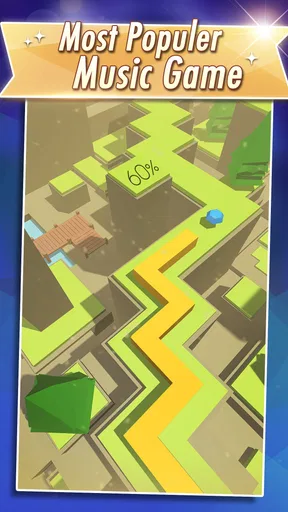
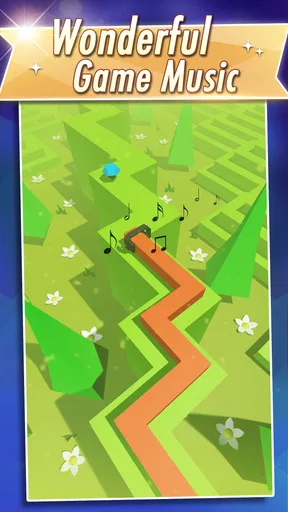
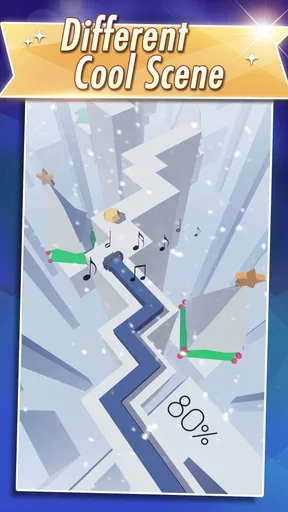
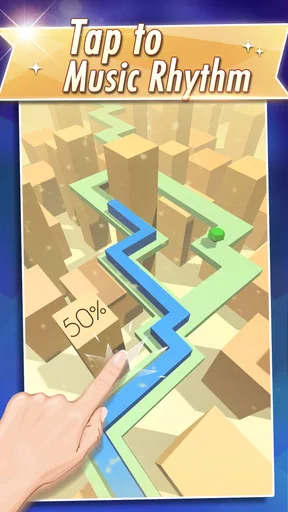

 Analysis by AppCompare
I went into Music Line expecting a quick rhythm game, and that is exactly where it makes the most sense. This is a free music game from Music Avengers, built around reacting to a beat while trying to keep a moving line under control. Its appeal is immediate: there is no long explanation before the first attempt, and a short session can easily turn into “one more try.” After spending time with it, I see it as a compact reflex challenge rather than a full music-production app or a deep rhythm simulator.
The basic idea is simple, but the timing creates the tension. You are not listening passively; you are using the music as a cue for decisions, and small mistakes can quickly end a run. That makes the experience easy to understand but harder to master. I would recommend it to someone who enjoys short, focused challenges and does not mind repeating a section until their reactions improve. I would not choose it for someone looking for licensed songs, a large social layer, or a calm way to explore music.
How Music Line feels during ordinary play
I find Music Line’s ordinary play works best when I give it a few undistracted minutes rather than treating it as background noise. The useful question is not just whether I can react quickly, but whether I enjoy learning how the sound and the moving path fit together. That distinction helps explain why its brief attempts can feel inviting to one player and frustratingly repetitive to another.
Quick starts and immediate speed
The strongest part of the game is how quickly it gets to the point. Music Line does not need to become a large project in your day. I can imagine opening it while waiting for a bus, taking a few attempts during a break, and closing it without feeling that I have abandoned a complicated campaign. That short-session design is important because the challenge depends on concentration. A game that asks for only a small amount of setup is better suited to this kind of reaction-based play.
The perceived speed comes from the combination of movement, sound, and the need to anticipate what comes next. Even when the controls appear straightforward, the pace can feel demanding because attention is split between the path ahead and the rhythm. The game is most enjoyable when I am fully engaged for a few minutes. If I am tired, distracted, or trying to play while doing something else, the same sequence feels much less forgiving.
That is also why the experience can feel faster than its simple presentation suggests. The challenge is not necessarily about having many buttons. It is about making the correct input at the right moment, then immediately preparing for the next one. A small delay in attention can turn a promising run into a restart. For players who like clean, repeatable tests of timing, this is a useful strength. For anyone who prefers a relaxed pace, it may feel stressful rather than entertaining.
What happens when the session gets intense
Heavy use in this game does not mean managing a large world or many on-screen systems. It means repeating difficult passages, concentrating through several attempts, and staying consistent when the music and visual movement begin to demand more from you. The pressure builds psychologically as much as mechanically. After a near-success, I often want to try again immediately, but that can lead to rushed decisions instead of better ones.
Worth Reading Before You Choose

EA SPORTS FC Mobile 26 Is a Bigger Football Game, but It Takes Time

Flipboard Shows What News Apps Must Do Beyond the Feed

Switching to Android Auto Means Rethinking Your Driving Routine

Google Calendar Makes a Crowded Week Easier to Manage

Ludo King Makes the Most of the Minutes Between Plans

Baby Panda World Brings Quick Play to Modern Phones, but Its Game Library Feels Busy
My most practical advice is to treat each attempt as a small exercise rather than a final test. When I focus only on surviving the next section, I make fewer impulsive corrections. Watching the route instead of staring at the line itself also helps, because anticipation is more useful than reacting at the last possible moment. This is one of the less obvious lessons of the game: improvement comes from learning the rhythm of a sequence, not simply moving faster with your fingers.
Repeated play can also expose the trade-off at the heart of the design. Short attempts make failure easy to accept, but they can make repetition feel narrow if the player does not enjoy chasing better performance. I would use it as a focused break, not as my only game. It works particularly well alongside slower games because it provides a very different kind of attention: immediate, narrow, and based on timing rather than exploration.
Stability and recovering from a failed run
Reliability matters more in a reaction game than it does in a casual puzzle because a moment of interruption can ruin an otherwise good attempt. In my experience, the best way to approach Music Line is to keep sessions deliberate and avoid treating it like background entertainment. If I am switching between apps, answering messages, or playing with unstable attention, the challenge becomes difficult for reasons unrelated to skill.
Recovery after failure is straightforward in the sense that the game encourages another attempt rather than requiring a long preparation period. That quick return is one of its practical advantages. A failed run does not need to become a major setback; I can immediately reconsider the timing and try again. The downside is that quick restarts can encourage automatic repetition. If a section keeps defeating me, repeating it without changing my focus rarely helps.
I found that a short pause can be more useful than a long chain of frustrated attempts. Listening carefully to the pattern, relaxing my grip, and then starting again gives me a better chance than pressing forward while annoyed. This is especially relevant for younger players, even though the game is rated for Everyone. The age rating makes it broadly accessible, but the intensity of repeated failure still depends on the individual player’s patience.
Older devices and practical expectations
The game supports Android 7.0 and later, which places it within reach of many older Android phones and tablets. That does not automatically mean every device will feel identical, so I would still keep expectations sensible when playing on aging hardware. In a timing-focused game, responsiveness matters more than visual complexity. A device that struggles with other games, runs hot, or has inconsistent touch response may make the experience feel less fair even when the software itself is behaving normally.
I would also avoid judging performance from the first few seconds alone. A quick start can feel smooth while longer sessions reveal heat, battery drain, or background interruptions on a particular phone. Those are device-specific concerns rather than features I would attribute to the game without testing the same hardware under the same conditions. My practical approach is simple: close demanding apps, keep the screen responsive, and play when the phone is not already overloaded.
Because the game is built around rhythm and reaction, headphones may be useful if the surrounding environment is noisy. That is not a requirement for understanding the concept, but it can make timing cues easier to notice. In a quiet room, the phone speaker may be enough. In a crowded place, outside sound can hide the details that help you anticipate the next movement. This is a good example of a small setup choice having a larger effect than expected.
What the rating and popularity suggest
Music Line has an average rating of 3.6 from around 9.9 thousand ratings, along with roughly 410 written reviews. I read that as a sign of a game with a clear audience but also some friction. It is not the kind of result that makes me assume everyone will enjoy it. Instead, it suggests that the simple rhythm concept works well for some players while others may find the repetition, difficulty, or overall scope limiting.
More than a million installs show that the idea has reached a substantial audience. That makes sense to me because the premise is easy to understand and the game is free to start. Still, popularity should not be confused with depth. The large install figure tells me that it is worth trying; it does not promise that it will replace a larger rhythm game or remain interesting for every player over a long period.
Free access and the role of purchases
The game is free, which lowers the barrier to trying it during a spare moment. There are in-app purchases ranging from $0.99 to $4.99 per item, so I would approach the purchase screen carefully and decide whether the basic experience already suits me before spending anything. For a short-session title, that is especially important: a small payment can feel reasonable if it removes a genuine annoyance, but it is less attractive if I am still unsure whether I enjoy the core challenge.
I prefer to evaluate the game on its free starting experience rather than assuming purchases are necessary. The central question is whether the timing gameplay itself feels satisfying. If it does, optional spending may be easier to justify. If it does not, buying something will not solve the main problem. Parents should also remember that an Everyone rating describes the content’s general suitability, while in-app purchases still deserve attention on a shared device.
How it compares with other music games
Music Line sits closer to a reflex arcade game than to a traditional rhythm-game library. If I want a broad selection of recognizable songs, detailed scoring systems, or a more elaborate progression structure, I would look at a larger music-game alternative instead. Those games may offer more variety, but they can also take longer to learn and ask for more storage, attention, or commitment.
Compared with a simple endless runner, this game’s identity comes more strongly from the musical timing. A runner can often be played by watching obstacles and reacting visually, while Music Line asks me to connect what I hear with what I see. That makes it a better choice when I want a beat-driven challenge, but a worse choice if I prefer relaxed visual play with less pressure on timing.
It also differs from a music player or practice tool. I would not install it to discover artists, organize a library, or learn an instrument. Its purpose is entertainment through coordination. That distinction sounds obvious, but it prevents disappointment: the word “music” describes the way the challenge feels, not a promise of a full musical workspace.
Who will get the most from it
I think the best audience is someone who enjoys retrying a compact challenge and noticing gradual improvement. It can suit commuters, students between tasks, and players who want something that can be understood without reading a long tutorial. It may also work for families looking for an accessible game, provided younger players are comfortable with repeated failure and an adult manages purchase settings when appropriate.
It is less suitable for anyone who wants a long narrative, strategic planning, or a broad collection of activities. Players who dislike restarting after mistakes may quickly lose patience. The same is true for people who need a game to remain enjoyable while multitasking. Music Line rewards attention, and its simplicity does not remove that demand.
One useful everyday scenario is a short waiting period with limited concentration available. I can play a few attempts, notice one timing mistake, and stop without losing a complicated position. Another scenario is using it as a warm-up before a longer gaming session: the narrow focus helps me become more alert, although it may be a poor choice if I am already frustrated or mentally tired.
Version, age range, and long-term fit
The current version is 1.5.2, and the game was released on May 29, 2018. That history helps explain why I see it as an established, compact experience rather than a brand-new experiment. The important question for a new player is not whether it has the newest presentation, but whether its focused rhythm challenge matches what they want today.
Its Everyone age rating makes the basic concept approachable across a wide range of players. Even so, accessibility of content is not the same as accessibility of difficulty. A child may understand the controls immediately but still find the timing demanding. An adult may appreciate the simplicity but become bored if they expect a large amount of content. I would introduce it as a quick skill game, not as an all-purpose family title.
My performance verdict
My final view is that Music Line succeeds when I treat it as a concentrated timing exercise. It starts quickly, asks for little commitment per attempt, and creates a satisfying loop for players who enjoy improving through repetition. The music gives the movement a stronger identity than an ordinary reflex game, while the simple format keeps it approachable on Android devices running version 7.0 or later.
The limitations are just as important. Its narrow concept will not satisfy everyone, especially players searching for a deep song catalog, relaxed play, or a long progression system. Performance also depends on the condition of the device and the player’s ability to maintain attention; an old or overloaded phone can make a timing game feel less comfortable, and a distracted player may mistake that frustration for poor design.
For me, this is worth trying because it is free and easy to understand, but I would keep expectations focused. I would recommend it to a friend who likes rhythm-based reflex challenges and wants something usable in short bursts. I would skip it in favor of a fuller music game if the goal is variety, customization, or a more substantial long-term experience. Music Line is at its best when a few minutes of precise, beat-aware play are exactly what you want.
Music Avengers has made a game with a clear purpose rather than an oversized feature list. That clarity is its main strength and its main limitation. If the idea of listening, reacting, failing quickly, and trying again sounds enjoyable, the free download is an easy experiment. If that loop already sounds repetitive, the game is unlikely to change your mind simply because it is popular or widely installed.
Pros
- Simple one-touch controls make the game easy to learn.
- Fast-paced levels provide an engaging challenge for reflexes.
- Bright visuals and rhythmic gameplay create an entertaining experience.
- Short levels are convenient for quick gaming sessions.
- The game offers a wide variety of tracks and environments.
Cons
- Difficulty can increase sharply
- which may frustrate casual players.
- Frequent ads may interrupt gameplay
- especially between attempts.
- Precise timing is required
- with little room for control mistakes.
- Some content or features may require in-app purchases.
- Gameplay can feel repetitive after extended sessions.
FAQs for Music Line
What is Music Line and how is the game played?
Music Line is a fast-paced rhythm and reflex game in which you guide a moving line through a constantly changing path. The main objective is to tap or hold at the right moments so the line turns correctly and avoids obstacles. Each level is synchronized with music, making timing especially important. The controls are simple, but the increasing speed makes later stages challenging.
Is Music Line free to download and play?
Music Line is generally available as a free download on supported Android and iOS devices. However, the exact business model may vary depending on the version available in your region. The game may include advertisements, optional in-app purchases, or paid items such as extra attempts, cosmetic content, or other bonuses. It is worth checking the store listing before downloading if you want to understand possible costs.
Does Music Line require an internet connection?
Music Line may work without a constant internet connection, which is useful when playing during travel or in areas with limited coverage. Nevertheless, an internet connection can still be required for advertisements, cloud-related features, updates, leaderboard synchronization, or in-app purchases. Offline availability may also depend on the specific version installed, so users should test the game after installation rather than assuming every feature works offline.
Is Music Line suitable for children and casual players?
Music Line is easy to understand because it uses straightforward controls and does not require extensive gaming experience. It can be enjoyable for children, teenagers, and adults who like rhythm-based challenges. However, the fast pace may become frustrating for younger players, and advertisements or optional purchases may require parental supervision. Reviewing the age rating and device settings is recommended before allowing children to play.
What devices are compatible with Music Line, and does it need much storage?
Music Line is designed for mobile devices running compatible versions of Android or iOS, although exact requirements can change with updates. The game usually does not demand the storage space or advanced hardware associated with large 3D titles, but older phones may experience slower performance, delayed responses, or reduced stability. Before downloading, check the official store page for the current operating-system requirements and available storage details.


